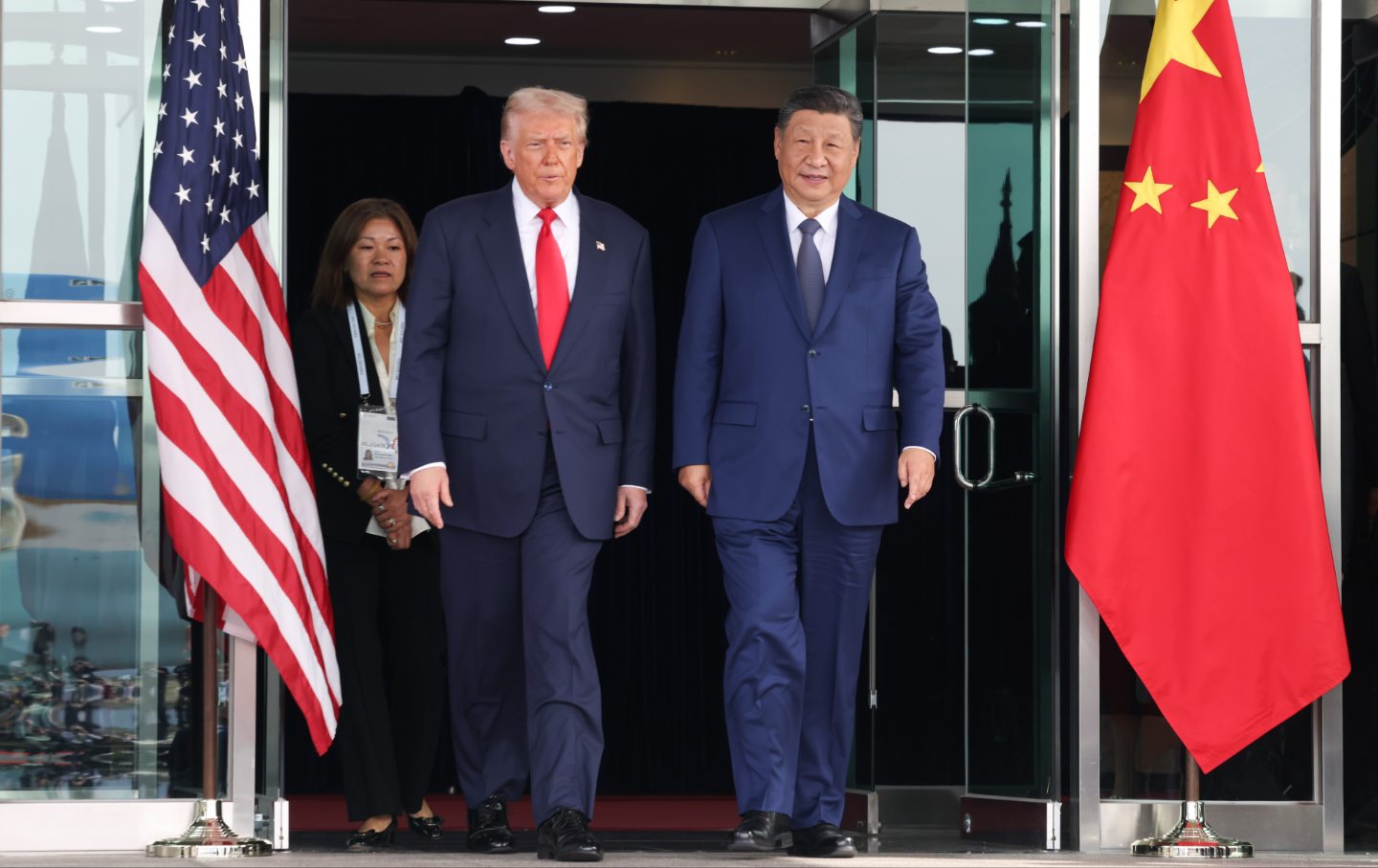
Netanyahu Rejects the ICC; the Saudis Push for a Security Deal With the US; Chinese Companies Will Be Sanctioned…
On this new episode of American Prestige, this week’s headlines from around the globe.

The Nation Podcasts
Here's where to find podcasts from The Nation. Political talk without the boring parts, featuring the writers, activists and artists who shape the news, from a progressive perspective.
News: Netanyahu Rejecting ICC, US-Saudi Security Deal, US Sanctioning Chinese Companies | American Prestige
Antony Blinken might claim to play the blues, but Danny and Derek have to deliver…the news. This week: in Palestine/Israel, the latest round of Gaza ceasefire talks (0:42), Netanyahu panics over a potential International Criminal Court (ICC) arrest warrant (6:54), and Blinken backs off of a threat to use the Leahy Law against IDF troops despite evidence of human rights abuses (10:39); Colombia announces that it will cut diplomatic ties with Israel (15:26); Saudi Arabia pushes for a security deal with the US (18:58); in Sudan, an imminent RSF attack on El Fasher in North Darfur (24:01); the US agrees to withdraw forces from Chad (25:26); Dutch PM Mark Rutte may be in line to become secretary general of NATO (28:33); new US sanctions will target Chinese firms supplying Russia (30:46); Ukrainian forces are falling back in Donetsk (33:10); in Haiti, a surprise PM appointment sparks dispute (35:04); and a New Cold War update featuring the potential addition of South Korea and New Zealand to AUKUS (37:09) and the Solomon Islands parliament’s election of a new PM friendly to China (39:50).
Our Sponsors:
* Check out Avocado Green Mattress: https://avocadogreenmattress.com
Advertising Inquiries: https://redcircle.com/brands
Privacy & Opt-Out: https://redcircle.com/privacy
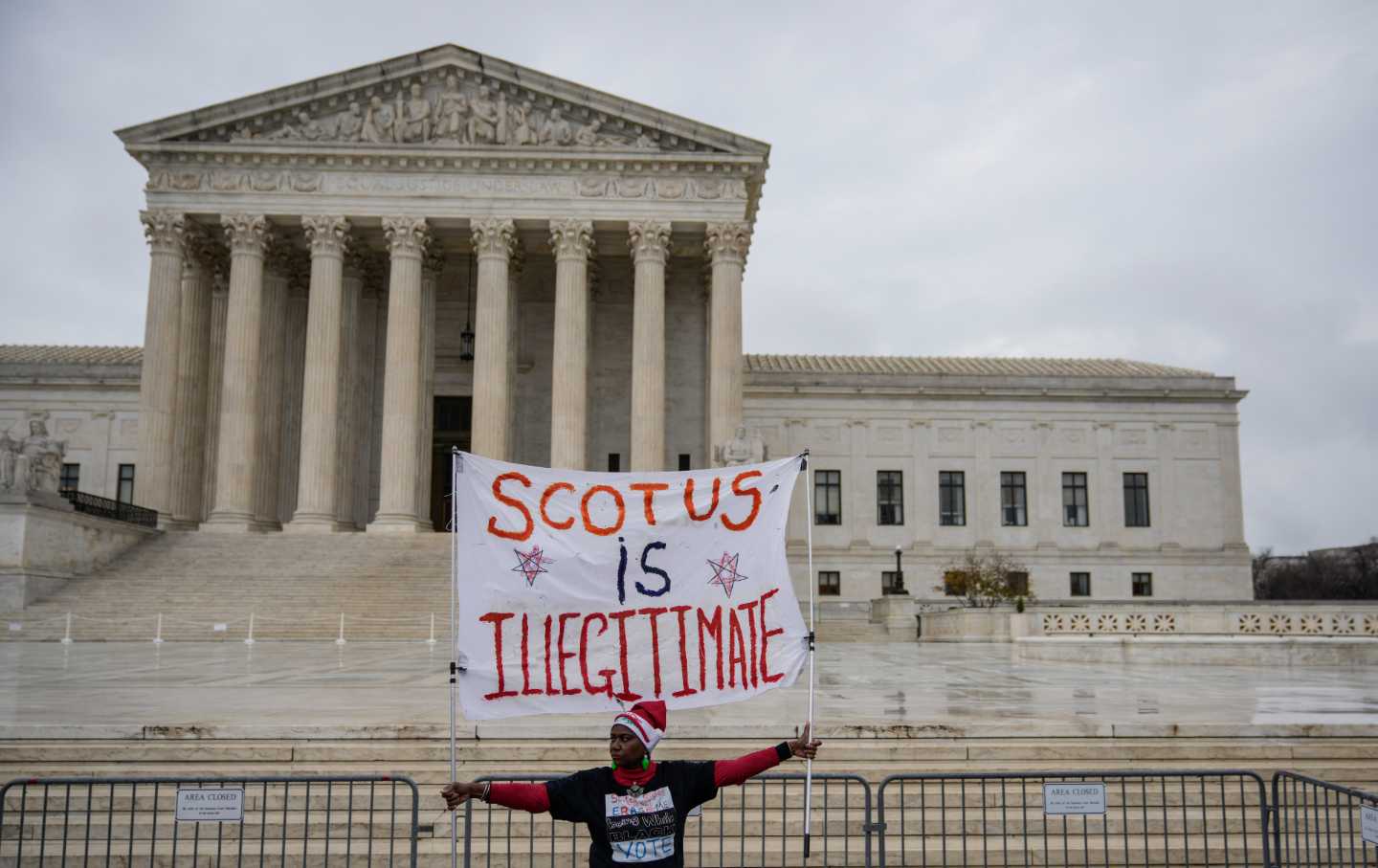
Demonstrators led by the protest group Code Pink wear masks of Israeli Prime Minister Benjamin Netanyahu as they sit at the entrance to the AIPAC policy conference, March 1, 2015.
(Jonathan Ernst / Reuters)This week: In Palestine/Israel, the latest round of Gaza cease-fire talks are held (0:42), Netanyahu panics over a potential International Criminal Court (ICC) arrest warrant (6:54), and Blinken backs off of a threat to use the Leahy Law against IDF troops, despite evidence of human rights abuses (10:39); Colombia announces that it will cut diplomatic ties with Israel (15:26); Saudi Arabia pushes for a security deal with the US (18:58); in Sudan, an RSF attack on El Fasher in North Darfur is imminent (24:01); the US agrees to withdraw forces from Chad (25:26); Dutch PM Mark Rutte may be in line to become secretary general of NATO (28:33); new US sanctions will target Chinese firms supplying Russia (30:46); Ukrainian forces are falling back in Donetsk (33:10); in Haiti, a surprise PM appointment sparks dispute (35:04); and, in a New Cold War update, South Korea and New Zealand may join AUKUS (37:09) and the Solomon Islands parliament elects a new PM friendly to China (39:50).
The Nation Podcasts
Here's where to find podcasts from The Nation. Political talk without the boring parts, featuring the writers, activists and artists who shape the news, from a progressive perspective.
The Transformation of the New York Waterfront w/ Karrie Jacobs | The Nation Podcast
In its heyday, the Bush Terminal industrial complex spanned several city blocks along Brooklyn’s waterfront and employed more than 35,000 people. Built by Irving Bush in the late nineteenth century, it was an "early intermodal shipping hub." Goods arrived by water and left by rail. Bananas, coffee, and cotton came in through doors on one side of the warehouses and were loaded onto trains on the other.
But after World War II, as trucks replaced rail and shipping patterns changed, the Terminal’s purpose faded and the vast complex slipped into disuse.
Today, Bush Terminal is again at the center of New York’s vision for urban reinvention— and a debate around development, displacement, and the future of work in the city.
Joining us on a deep dive into Bush Terminal is veteran architecture critic and writer Karrie Jacobs. Her essay, “On the Waterfront,” appears in our December issue of the Nation.
Our Sponsors:
* Check out Avocado Green Mattress: https://avocadogreenmattress.com
Advertising Inquiries: https://redcircle.com/brands
Privacy & Opt-Out: https://redcircle.com/privacy
Search Results placeholder
Subscribe to The Nation to Support all of our podcasts
Disobey authoritarians, support The Nation
Over the past year you’ve read Nation writers like Elie Mystal, Kaveh Akbar, John Nichols, Joan Walsh, Bryce Covert, Dave Zirin, Jeet Heer, Michael T. Klare, Katha Pollitt, Amy Littlefield, Gregg Gonsalves, and Sasha Abramsky take on the Trump family’s corruption, set the record straight about Robert F. Kennedy Jr.’s catastrophic Make America Healthy Again movement, survey the fallout and human cost of the DOGE wrecking ball, anticipate the Supreme Court’s dangerous antidemocratic rulings, and amplify successful tactics of resistance on the streets and in Congress.
We publish these stories because when members of our communities are being abducted, household debt is climbing, and AI data centers are causing water and electricity shortages, we have a duty as journalists to do all we can to inform the public.
In 2026, our aim is to do more than ever before—but we need your support to make that happen.
Through December 31, a generous donor will match all donations up to $75,000. That means that your contribution will be doubled, dollar for dollar. If we hit the full match, we’ll be starting 2026 with $150,000 to invest in the stories that impact real people’s lives—the kinds of stories that billionaire-owned, corporate-backed outlets aren’t covering.
With your support, our team will publish major stories that the president and his allies won’t want you to read. We’ll cover the emerging military-tech industrial complex and matters of war, peace, and surveillance, as well as the affordability crisis, hunger, housing, healthcare, the environment, attacks on reproductive rights, and much more. At the same time, we’ll imagine alternatives to Trumpian rule and uplift efforts to create a better world, here and now.
While your gift has twice the impact, I’m asking you to support The Nation with a donation today. You’ll empower the journalists, editors, and fact-checkers best equipped to hold this authoritarian administration to account.
I hope you won’t miss this moment—donate to The Nation today.
Onward,
Katrina vanden Heuvel
Editor and publisher, The Nation